CIBC Investor's Edge
Transfer your investments to CIBC Investor's Edge and get rewarded with an offer of up to $3,000.
- ✓$6.95 flat-rate commissions
- ✓Backed by Big Five bank security
- ✓Transfer bonus offer up to $3,000
Wondering when you'll get your Saskatchewan SAID payments?
Saskatchewan SAID payments are typically issued on the second-to-last business day of the month and are meant to provide financial support for the following month.
Below, I’ll give you a full list of the upcoming Saskatchewan SAID payment dates, so you can mark your calendars. Then, I’ll break down some of the key SAID benefits and how much you can expect to receive based on your living situation.
Saskatchewan SAID Payment Dates 2025
| Month | Mailed Cheques | Direct Deposit Payments |
|---|---|---|
| January | December 24, 2024 | December 30, 2024 |
| February | January 28, 2025 | January 30, 2025 |
| March | February 25, 2025 | February 27, 2025 |
| April | March 26, 2025 | March 28, 2025 |
| May | April 25, 2025 | April 29, 2025 |
| June | May 27, 2025 | May 29, 2025 |
| July | June 25, 2025 | June 27, 2025 |
| August | July 29, 2025 | July 31, 2025 |
| September | August 26, 2025 | August 28, 2025 |
| October | September 24, 2025 | September 26, 2025 |
| November | October 29, 2025 | October 31, 2025 |
| December | November 26, 2025 | November 28, 2025 |
SAID payments are typically issued via direct deposit to your chequing account on the second or third-to-last business day of each month. This ensures that recipients receive their funds in time to pay their rent and living expenses on the first of the following month.
How Are Saskatchewan SAID Payments Disbursed?
Saskatchewan SAID payments are typically sent to beneficiaries via direct deposit to their primary bank account. Most recipients should have access to their funds on the same day or within 24 hours of the payment date, depending on how quickly your bank can process the transaction.
However, if you don’t have direct deposit set up, you’ll receive a paper cheque sent to your primary mailing address.
Of the two methods, I recommend signing up for direct deposit, as it’s safer and quicker. Cheques can easily get lost or mishandled in the mail. Severe weather could also cause delays which could leave you scrambling at the last minute.
Eligibility Criteria for SAID
You may be wondering whether you qualify for SAID or not. Understanding the eligibility criteria is crucial before you dive into the application process. So, let's get right to it.
To be eligible for SAID, you must meet the following criteria:
-
Residency: You must be a resident of Saskatchewan.
-
Age: Applicants must be 18 years or older.
-
Disability: A significant and enduring disability must be present. This is usually defined as a mental or physical impairment that severely limits daily activities and is expected to last for a year or more.
-
Financial Need: The program is designed for lower-income individuals. Hence, you'll need to provide financial records as proof of your income and expenses.
-
Assessment: A comprehensive needs assessment may also be necessary to determine your level of disability and the kind of support you require.
-
Documentation: You will also need to provide medical documentation confirming your disability status. This generally includes reports from doctors or other healthcare providers.
-
Other Program Enrollment: You cannot be enrolled in other similar financial assistance programs or be receiving similar benefits from other agencies.
-
Additional Criteria: The Ministry of Social Services may impose other conditions as they deem fit for determining your eligibility.
Meeting these criteria does not guarantee approval, but it does make you a candidate for SAID benefits. If you think you meet the eligibility requirements, the next step is to apply.
SIS vs. SAID Payment Dates
The Saskatchewan Assured Income for Disability (SAID) is a social welfare program introduced to the province by the Ministry of Social Services in 2012. It was designed to replace the previous, outdated disability payment system in Saskatchewan by providing needed improvements and expanding eligibility.
Saskatchewan’s SAID program provides financial income support for eligible residents with disabilities. It’s usually reserved for individuals who have lifelong disabilities or long-term injuries.
Individuals with significant mental or physical disabilities may find it difficult to make ends meet, and SAID can provide enough financial assistance for beneficiaries to stay on top of their monthly living expenses.
However, Saskatchewan offers another welfare program called Social Income Support (SIS) for individuals who don’t suffer from a disability. SIS is available to many lower-income families and individuals and provides a similar level of support to help recipients stay on top of their bills and stay afloat.
SIS and SAID are two sides of the same coin, and both are handled by the social services department of Saskatchewan’s government. As such, SIS and SAID payments are issued on the same day.
SAID: Saskatchewan Assured Income for Disability
Prior to 2012, Saskatchewan offered a basic disability support system for eligible residents. The previous disability program was limited to individuals receiving home care, though, and didn’t offer as high of a benefit payment.
When the program was updated and replaced with SAID in 2012, the eligibility was expanded to include beneficiaries who lived outside of home care, in a board and lodging arrangement or in their own space. It’s very similar to Ontario’s ODSP program.
SAID aims to provide basic financial support to those with disabilities who cannot meet their financial obligations and keep up with the bills. Program eligibility is limited to lower-income individuals, and applicants must demonstrate a clear financial need to be approved for support.
Key SAID Benefits You Could Receive
SAID primarily provides a living income benefit, which is designed to replace the income that the individual would otherwise be able to receive from working a part-time job.
However, SAID also provides additional monthly benefits and one-time supplements designed to provide extra assistance to individuals in unique situations.
Living Income
The living income benefit is the largest portion of your SAID benefit. This support ranges from $931 to $1,454 per month, depending on where you live and how many dependents/children you have living with you.
Exceptional Need Income
In addition to the primary living income benefit, SAID also provides supplemental payments to help cover the cost of necessities, such as:
-
Pet food and grooming for service animals
-
Doctor-recommended clothing, supplements, and medication
-
Special food items (if you’re on a doctor-recommended diet)
-
Home care items
Disability Income
Your disability income is a fixed monthly amount that is issued based on the applicant’s disability and its severity. This supplemental amount helps cover costs associated with disability care, such as prosthetics, hearing devices, and more.
Child Care Benefit
The child care benefit is another fixed monthly benefit that’s issued to eligible SAID recipients who have children they care for. This supplement is provided to help parents pay for short-term daycare costs.
Saskatchewan SAID Payment Amounts & Tiers

Now that you know when to expect your money, you may be wondering how much you should expect.
The amount that you’ll receive differs from one individual to the next and depends on various factors, such as:
-
Your financial need
-
Your living situation
-
Your disability
-
Dependents in your care
-
The city you live in
-
Additional supplements you're eligible for
SAID applicants are divided into tiers based on the region of Saskatchewan they live in. This ensures that everybody receives a fair amount based on the average cost of living in their town or city. Below, I’ll break down the four SAID tiers and show you the benefit cap for some of the primary SAID benefits and supplements.
SAID Tiers
Saskatchewan divides SAID recipients into four tiers based on their location. Since your tier determines the amount you’re eligible for, I recommend looking at the chart below to determine which tier you’re in before you continue reading:
| SAID Benefit Tier | Cities |
|---|---|
| Tier A | Lloydminster, Regina, Saskatoon, and Estevan, including the bedroom communities of Allan, Asquith, Balgonie, Belle Plaine, Bradwell, Buena Vista, Clavet, Colonsay, Dalmeny, Delisle, Disley, Dundurn, Edenwold, Elstow, Grand Coulee, Langham, Lumsden, Lumsden Beach, Martensville, Meacham, Osler, Pense, Pilot Butte, Regina Beach, Shields, Thode, Vanscoy, Warman, and White City |
| Tier B | Creighton, Kindersley, La Loche, La Ronge, Macklin, Melville, Prince Albert, Rosetown, Weyburn, and Yorkton |
| Tier C | Battleford, Fort Qu'Appelle, Humboldt, Meadow Lake, Melfort, Nipawin, Moose Jaw, North Battleford, Swift Current, Watrous |
| Tier D | Everybody else - includes other towns, rural areas, and social housing units outside of Tiers A, B, and C |
If your city or town wasn’t included in Tiers A - C, then it’s safe to assume that you’re in Tier D. The tiers are arranged according to average living expenses.
Tier A includes the more expensive cities like Regina, Lloydminster, and White City, while Tiers B and C include smaller cities and towns where the cost of living is lower.
Tier D is primarily made up of individuals who live in more rural towns or subsidized housing, where the cost of living is noticeably cheaper than the other tiers.
1. SAID Living Income Payment Amount
Now that you’ve identified which tier you’re in, you’ll be able to accurately predict how much you could receive for your monthly SAID payment. Keep in mind that these numbers represent the maximum you can receive.
The actual amount you’re approved for could be a bit lower, as it depends on your unique case and living situation.
Here are the current SAID payment caps for single applicants and single parents who have dependent children, based on their tier and number of children in their care:
| SAID Tier | Single Applicant | Single Parent With 1 - 2 Children | Single Parent With 3 - 4 Children | Single Parent With 5+ Children |
|---|---|---|---|---|
| Tier A | $1,064 | $1,316 | $1,378 | $1,454 |
| Tier B | $1,009 | $1,194 | $1,255 | $1,329 |
| Tier C | $968 | $1,168 | $1,232 | $1,295 |
| Tier D | $931 | $1,034 | $1,085 | $1,162 |
Applicants who are married or living in a domestic partnership may receive even more benefits, which increase if they both care for children. Here are the SAID living income benefit payments for couples:
| SAID Tier | Couple With No Children | Couple With 1 - 2 Children | Couple With 3 - 4 Children | Couple With 5+ Children |
|---|---|---|---|---|
| Tier A | $1,497 | $1,621 | $1,683 | $1,759 |
| Tier B | $1,411 | $1,499 | $1,560 | $1,634 |
| Tier C | $1,360 | $1,473 | $1,537 | $1,600 |
| Tier D | $1,265 | $1,339 | $1,390 | $1,467 |
2. Modified Living Benefit Payment Amount
Individuals living in a room-and-board situation (as opposed to their own residence) will receive a modified living benefit payment. This amount is incrementally less than the standard living benefit.
Unlike the standard living benefit, which is based on a tier system, the modified living benefit payment is not affected by your tier.
Here are the modified SAID living benefit payment caps based on the applicant’s living situation:
| SAID Applicant Status | Modified Living Benefit |
|---|---|
| Single Applicant | $805 |
| Couple | $1,210 |
| Children Under 18 | $85 for each dependent child |
SAID Supplemental Benefits
In addition to the standard living benefits that account for the majority of your monthly SAID payment, recipients are also eligible for small additional benefit payments.
Most of these benefits only provide the recipient with an additional $20 to $50 per month. However, if you’re approved for multiple supplements, then the combined amount can add up to a significant bit of extra support at the end of the month.
The most common SAID supplemental benefits include:
-
Utilities Benefit Payment Amount
-
Laundry Allowance
-
SAID Child Care Benefit Payment Amount
-
Disability Income Benefit
-
Northern Living Supplement
-
Transportation Benefit
-
Exceptional Needs Activity Benefit
-
Household Disability Support Benefit
-
Personal Living Benefit
For a full list of Saskatchewan's SAID supplemental benefits and how much you could receive, take a look at the official SAID handbook, which can be found here.
How To Apply For SAID In Saskatchewan
Unfortunately, applicants cannot apply for SAID benefits online as they can for similar programs in other provinces.
If you think you may be eligible to receive SAID benefits, you’ll need to call the SAID Service Centre (1-888-567-7243) or visit a branch office of the Ministry of Social Services.
Conclusion - When Are Saskatchewan SAID Benefits Issued?
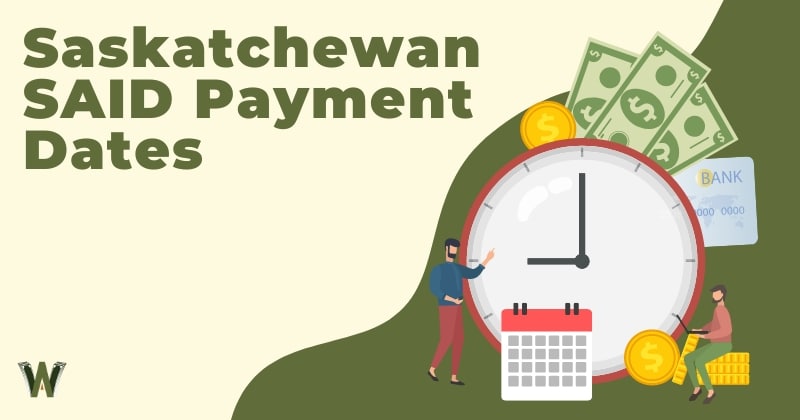
Saskatchewan’s SAID payments are always issued on the second or third-to-last business day of each month, so recipients can access their funds going into the new month. SIS payments are also issued on the same day, which makes it a bit easier to remember.
If you’re disabled and unable to work a traditional physical labour job, then you could be the perfect fit for a remote work position where you can work online from home. Keep on reading to see my list of the best remote careers in Canada next!
Best next step
Keep exploring this topic
If you want to go deeper, these are the most useful follow-up pages and tools for this topic.
Tax planning
Estimate your take-home pay first
Use the tax calculator before choosing software, moving cash, or making a savings plan.
Banking next step
Compare high-interest savings rates
Move from banking basics into current cash rates and safer places to park your money.
Savings tool
See how compound growth adds up
Turn a practical money question into a long-term plan with a quick growth projection.
Advertisement
7 stocks to buy and hold forever
Proven winners for income investors — blue-chip dividend stocks to hold for decades.
Get the FREE Report
Christopher Liew, CFA, CFP®
Christopher is the founder of Blueprint Financial and a CTV News personal finance columnist. As a dual-designated CFA charterholder and Certified Financial Planner (CFP®), he helps Canadians reduce financial stress through clear, customized financial plans.
View Full Profile →✅ Reviewed by Certified Financial Professionals
This content has been reviewed by CFA® charterholders and Certified Financial Planners (CFP®) with over a decade of experience in Canadian financial markets. All information is fact-checked against official Canadian sources and regulations.
Why these credentials matter: CFA® charterholders complete 900+ hours of rigorous study in investment analysis and ethics. CFP® professionals are held to the highest standards of financial planning competency and fiduciary duty in Canada.
⚠️ Professional Disclaimer
This content is for educational purposes only and should not be considered personalized financial advice. While our team brings professional expertise, individual circumstances vary. For personalized guidance, consult with a qualified financial advisor, tax professional, or mortgage specialist.