CIBC Investor's Edge
Transfer your investments to CIBC Investor's Edge and get rewarded with an offer of up to $3,000.
- ✓$6.95 flat-rate commissions
- ✓Backed by Big Five bank security
- ✓Transfer bonus offer up to $3,000
Worried about getting your online investment accounts hacked?
If you are, you have good reason to be concerned. 2019 taught us that hackers are everywhere. And if you’re not careful, your personal information may be found in the hands of hackers.
With millions of internet users affected, there are only a few people left online that haven’t been hacked in some way.
Take, for example, these cases where hackers have succeeded:
-
Capital One’s 100 million customer breach, in which hackers exposed credit card application data for customers who applied between 2005 and 2019.
-
Equifax’s 143 million customer data breach, where sensitive information such as Social Security numbers and driver’s license numbers were compromised.
-
Marriott’s 500 million guest breach, in which passport numbers, credit card, and debit card numbers were exposed.
-
Exactis’s 340 million individuals record breach, which included consumer, business, and digital records.
Stopping hackers is important. Here’s what you should do if someone hacks your online accounts and three strategies you can implement to keep your accounts secure.
What Happens if Hackers Steal My Money?
A reporter asked a spokesperson at Canadian Banker’s Association— which represents Canada’s largest banks— whether customers or banks would assume liability when hackers break into the online banking systems.
He wrote that banks “have no higher priority than the security of their customers' money.”
However, CBC News has reported otherwise; it turns out that Canadian citizens aren’t offered much protection against hackers.
For example, there are many instances of banks not paying for hacked bank accounts, such as the case of Patricia Widdis. She reported that hackers gained access to her RBC Royal Bank account in May 2018. Patricia reported losing $12,000 and was only refunded $7,000.
Another example is Curtis Hamilton who was targeted by hackers in November 2018 and lost $2,000 from his TD Bank trading platform— he has yet to get his money back despite hiring lawyers.
The Canadian Deposit Insurance Corporation (CDIC), which is there to protect Canadian deposits up to $100,000, says on their FAQ that the “CDIC does not cover losses due to fraud. CDIC coverage only applies in the event of a member institution failure.”
This means that Canadian banks aren’t responsible for any losses due to hackers. So let’s take a look at three strategies you can implement to protect your accounts.
Strategy #1: Use a password manager

Most people use very weak passwords and reuse the same ones across different websites. After all, how are you supposed to use strong, unique passwords for all the different sites you visit? The solution is using a password manager.
Even Verizon’s 2019 Data Breach Investigations Report specifically mentions password managers as a key recommended tool to thwart hacking attempts.
Using a password manager like Lastpass, 1Password, Dashlane, or Keeper will take a load off your mind so you can free up your much-needed brain power to do other more productive things.
Strategy #2: Use two-factor authentication
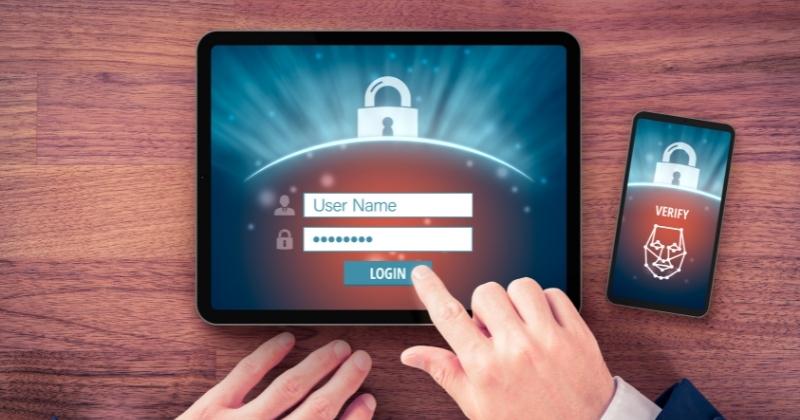
Now that you have a password manager, the next step is to use two-factor authentication. This strategy involves using two ways of proving your identity, and you can set it up for most major Canadian bank accounts.
Two-factor authentication ensures that even if a hacker has your password, they won’t be able to access your account unless they have another form of verification, such as verifying by email, text message, or an authenticator app.
You can even use this on your password manager as well for accessing individual websites. Now that you have two-factor authentication and a password manager let’s move on to the last strategy.
Strategy #3: Change your router password
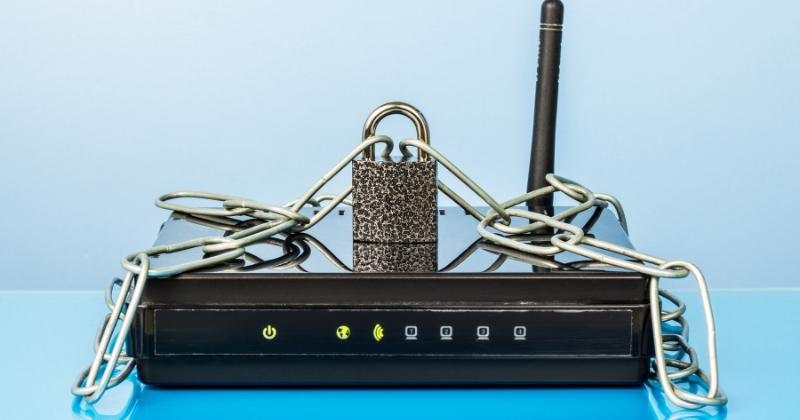
Many hackers use internet routers to perform high-profile breaches. If you purchase an internet router, it will come with a default password consisting of letters and numbers.
The problem is that most people don’t change these default passwords, and they are easily available online, on the dark web and on the internet.
Changing your password is a simple step you can take to prevent hackers from accessing your personal information.
Are You Safe From Hackers?
Canadian banks have a lot of catching up to do to make sure its customers feel entirely safe. With the ever-increasing reliance on technology, hackers are gaining more and more knowledge and the ability to hack into bank accounts.
Best next step
Keep exploring this topic
If you want to go deeper, these are the most useful follow-up pages and tools for this topic.
Banking next step
Compare high-interest savings rates
Move from banking basics into current cash rates and safer places to park your money.
Safe cash option
See the best GIC rates in Canada
Compare guaranteed rates if you are choosing between keeping cash liquid or locking it in.
Savings tool
Estimate your TFSA room
Work out how much tax-sheltered room you still have before you move extra cash into savings.
Advertisement
7 stocks to buy and hold forever
Proven winners for income investors — blue-chip dividend stocks to hold for decades.
Get the FREE Report
Christopher Liew, CFA, CFP®
Christopher is the founder of Blueprint Financial and a CTV News personal finance columnist. As a dual-designated CFA charterholder and Certified Financial Planner (CFP®), he helps Canadians reduce financial stress through clear, customized financial plans.
View Full Profile →✅ Reviewed by Certified Financial Professionals
This content has been reviewed by CFA® charterholders and Certified Financial Planners (CFP®) with over a decade of experience in Canadian financial markets. All information is fact-checked against official Canadian sources and regulations.
Why these credentials matter: CFA® charterholders complete 900+ hours of rigorous study in investment analysis and ethics. CFP® professionals are held to the highest standards of financial planning competency and fiduciary duty in Canada.
⚠️ Professional Disclaimer
This content is for educational purposes only and should not be considered personalized financial advice. While our team brings professional expertise, individual circumstances vary. For personalized guidance, consult with a qualified financial advisor, tax professional, or mortgage specialist.