Not only do teachers have to deal with educating our youth, but during the pandemic, they had to figure out ways to keep students engaged while maintaining flexibility around ever-changing guidelines.
The Canadian Teachers Federation interviewed teachers regarding their experiences during the pandemic and found that over 97% of interviewees reported increased physical, mental, and emotional workloads.
The pandemic brought up questions regarding the adequacy of teacher pay. I decided to explore that and find out how much do teachers make in Ontario.
Advertisement
According to Statistics Canada, primary and secondary school teachers earn anywhere from $51,263 to $94,612, depending on their years on the job.
The Breakdown Between Experience and Pay
Like any other job, Canadian teachers just starting out will make well below a coworker that’s been at the school for 15 years.
Statistics Canada broke down the average salary per province based on teachers’ starting salary and the salary after 10 and 15 years. Here’s how it played out for Ontario.
| Starting Salary | 10 Years Experience | 15 Years Experience | |
|---|---|---|---|
| Canadian Average | $52,064 | $84,228 | $87,202 |
| Ontario | $51,263 | $94,612 | $94,612 |
Although teachers in Ontario start a bit below the average Canadian salary, they will more than make up for it as their experience grows.
Factors Affecting Teacher Pay

While experience plays a big role in how much teachers make, it isn’t the only factor. The Canadian Job Bank found that primary teachers in Ontario generally make less than secondary teachers. The median primary teacher wage is $43.96 compared to $47.74 for secondary teachers.
Additional Qualifications (AQs)
In addition, teachers can continue to obtain professional development certificates that could increase their wage-earning potential.
Such AQs include
-
Subjects you’re qualified to teach
-
Learn how to teach in the French language system.
-
Acquire skills to teach students with functional needs.
Location
Where you teach depends on the range of your salary. In the example below, you’ll find wages for secondary teachers throughout Ontario, with averages of the low, median, and high pay of each location, as well as that of Ontario and Canada as a whole.
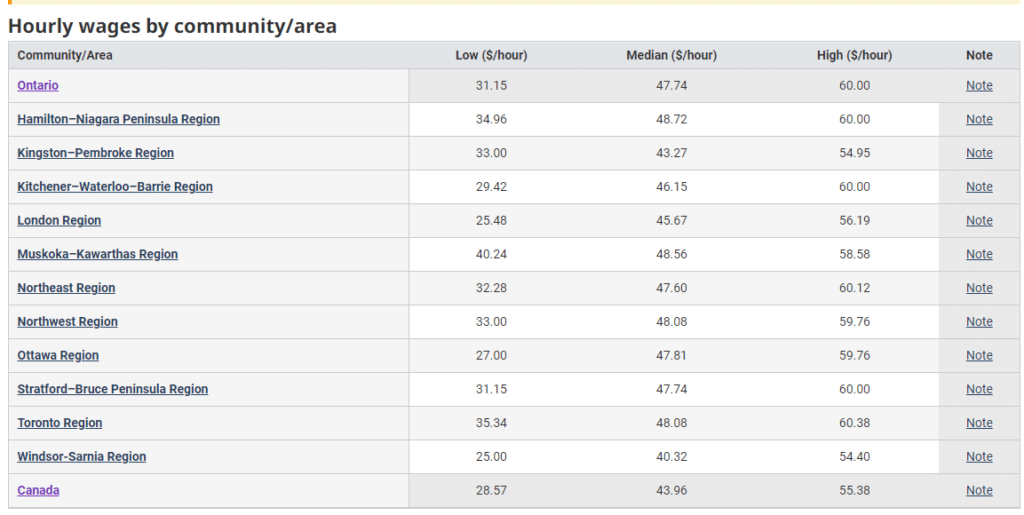
You’ll notice that while the median and high rates don’t vary too much, the lower end, usually reserved for starting salaries and new teachers, can range from $25/hour to $40.24/hour. As a new worker or someone just starting out, a $15/hour difference can make or break you financially.
The bottom line is that location matters, and it’s important to research the cities you plan to teach in before applying for jobs.
Other Benefits Included In Pay
In Canada, teachers need to join a teachers’ association that will negotiate benefits in addition to the basic salary.
Of course, the benefits included as part of the overall compensation package will vary according to province and from school to school, but for the most part, here’s what’s usually included:
-
Dental Insurance
-
Short-term and long-term disability
-
Maternity leave
-
Life insurance
-
Supplemental medical insurance
-
Pension plan
How Does Canada Stack Up To the Rest of the World?
According to the most recent data from the Organisation for Economic Co-operation and Development (OECD), Canada ranks third in teacher salaries from around the world. The data studied was for primary teachers with over 15 years of experience.
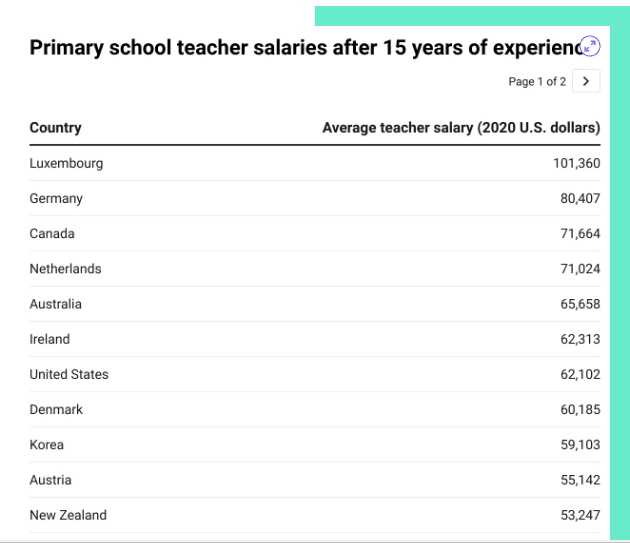
Canada’s focus on education, both on the amount of spending per pupil and the higher teacher salaries, accounts for adults with a higher percentage of bachelor’s degrees than on average.
The 2015 OCED report, where Canada was fourth in teacher salaries, stated the following.
"In Canada, the tertiary education system rests on a wide diversity of institutions and programs; a quarter of Canadians aged 25-64 attained a college diploma as their highest level of education, a proportion higher than in any other OECD country.”
Final Thoughts
Canada’s teachers are among the top paid in the world. The average salary for teachers in Ontario ranges from $51,263 to $94,612, depending on experience.
While Canadian teacher salaries are pretty high, many look for other ways to supplement their income. One top way is through the Teachers Pay Teachers (TPT) platform. Want to learn more about it? Check out my recent article on it here.
Best next step
Keep exploring this topic
If you want to go deeper, these are the most useful follow-up pages and tools for this topic.
Tax planning
Estimate your take-home pay first
Use the tax calculator before choosing software, moving cash, or making a savings plan.
Banking next step
Compare high-interest savings accounts
Move from banking basics into current cash rates and safer places to park your money.
Savings tool
See how compound growth adds up
Turn a practical money question into a long-term plan with a quick growth projection.
Advertisement
7 stocks to buy and hold forever
Proven winners for income investors — blue-chip dividend stocks to hold for decades.
Get the FREE Report
Christopher Liew, CFA, CFP®
Christopher is the founder of Blueprint Financial and a CTV News personal finance columnist. As a dual-designated CFA charterholder and Certified Financial Planner (CFP®), he helps Canadians reduce financial stress through clear, customized financial plans.
View Full Profile →✅ Reviewed by Certified Financial Professionals
This content has been reviewed by CFA® charterholders and Certified Financial Planners (CFP®) with over a decade of experience in Canadian financial markets. All information is fact-checked against official Canadian sources and regulations.
Why these credentials matter: CFA® charterholders complete 900+ hours of rigorous study in investment analysis and ethics. CFP® professionals are held to the highest standards of financial planning competency and fiduciary duty in Canada.
⚠️ Professional Disclaimer
This content is for educational purposes only and should not be considered personalized financial advice. While our team brings professional expertise, individual circumstances vary. For personalized guidance, consult with a qualified financial advisor, tax professional, or mortgage specialist.