CIBC Investor's Edge
Transfer your investments to CIBC Investor's Edge and get rewarded with an offer of up to $3,000.
- ✓$6.95 flat-rate commissions
- ✓Backed by Big Five bank security
- ✓Transfer bonus offer up to $3,000
Do you want to build your own house? If so, it's important to start planning ahead to ensure your finances are in order.
On average, building a standard house with an unfinished basement from the ground up can cost between $105 and $315 per square foot, and custom-built homes can range between $275 to $1,225 per square foot.
Keep in mind that this doesn't include the cost of the underlying land itself.
This is just an average number, though. The total cost to build a house can vary depending on the location, size of the home, and whether or not it's built using a custom design. Below, I'll discuss some of the key factors that determine overall home-building costs, so you can start planning for your dream home!
How Much Does It Cost Per Square Foot To Build A House In Canada?
Assuming that you have a vacant plot of land to build on, home building costs are typically calculated per square foot. Larger homes can cost significantly more, as they require more materials and require greater labour costs.
Home construction typically ranges between $105 and $315 per square foot for a standard single-family residential home, according to the Altus Group (a company that provides detailed intelligence for real estate investors).
I know this is a rather broad range, but that's because so many factors go into calculating the total cost. It's not enough to simply calculate the square footage of the home itself.
Not including land costs, you also have to consider costs such as:
-
Building permits
-
Custom architectural design
-
Material costs (costs can go up if specialty materials are used)
-
The type of land the home's being built on
-
Labour costs and construction
-
Utility connections (hydro, water, internet)
The location the home is being built is also a major determinant of the overall cost. A home built in rural areas like Nova Scotia is going to cost far less than a home built near major Canadian cities like Toronto or Vancouver.
According to the Altus Group's 2023 Canadian Cost Guide, here's what you can expect to pay per square foot for custom-built and standard timber-framed homes by area:
As you can see, building a standard pre-designed "cookie-cutter" house from the ground up is significantly cheaper compared to constructing a custom-built home.
Custom-built homes require professional designs from an architect and often come with unique design challenges that require top-tier construction teams and project managers.
Custom doesn't always have to be super-expensive, though. For example, custom-built shipping container homes have become quite popular and may offer a more affordable alternative to a custom timber home.
Key Factors That Determine The Cost To Build A House
Now that you have some facts and numbers to start with let's take some time to overview some of the key factors that determine the total cost of building a home.
1. Land Costs

Before you even start the building process, you'll need to purchase vacant land to build on. The cost of land can vary just as much as the building costs and depend on a number of factors, such as:
-
Where the land is located
-
How close to major highways the land is
-
If the land has existing utility connections
You also have to consider whether or not the land has been cleared. Around half of Canada is populated by trees and forests, and many homebuyers end up purchasing land that needs to be cleared (at least partially) before construction.
Land clearing involves cutting down trees, removing the trees, removing stumps, and grading the soil so that a foundation for the home can be laid. All of this requires heavy machinery, time, and a significant sum of money and must be completed before any construction actually begins.
Another land-based factor that can contribute to your overall construction costs is the type of land.
Depending on local regulations, a land surveyor may be required to visit the proposed building site and test the sediment.
Certain types of soil are more or less friendly to home construction, and additional supports may be required for certain home designs. This is especially true in mountainous regions and when building on an incline.
2. Building Permits
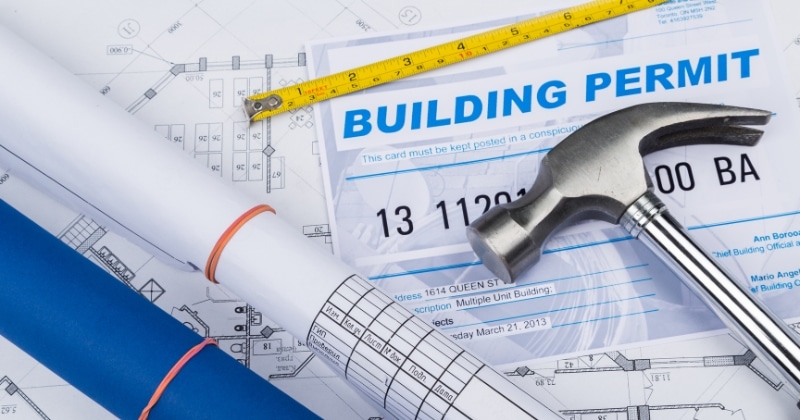
Once the land is situated, you and your contractors will need to obtain building permits before you can begin construction on your new house. This can be a lengthy and tedious process, depending on where you live and how strongest the building regulations are.
Without a building permit, construction cannot begin. Attempting to start the project before it's been officially approved can result in hefty fines and further delays.
If you're building in a more rural location, it will likely be easier to obtain the permits, providing there are no special environmental regulations. However, if you're building closer to a city centre, things can become more difficult.
Building permits typically start at a flat rate of around $150 to $300, which may cover the first $5,000 or so of construction costs. From here, the permit cost is incrementally increased based on the total projected construction cost.
The good news is that obtaining the building permits is usually one of the least expensive parts of building a custom home!
3. Custom Home Costs And Architectural Design

When building your own home on your own land, you'll be able to choose between three options:
-
Erecting a pre-fabricated (or partially-fabricated) home on your land
-
Building a traditional timber home from a ready-made blueprint
-
Designing and building a custom home
The first option is the most cost-effective, as minimal construction is required. Typically, a large truck will deliver your pre-fabricated home on-site, and a construction team will set everything up.
In the case of partially-fabricated homes, a crane and a construction team can often assemble the home within a week (often less).
The second option is a great middle-of-the-road option. These homes are your standard residential homes that you'll find driving through a neighbourhood. You'll purchase a pre-designed blueprint from a home-builder, that includes a list of all of the associated materials.
Simply give the plan to your general contractor, and they'll handle the rest.
The third and final option is the most expensive.
You'll start by working with an architect who will consult you and help you design the home of your dreams. The architect will painstakingly perfect every detail until you're happy with the finished product (or can no longer afford to pay for revision drafts).
From here, the architect will create a blueprint for the general contractor, who will handle the construction of the project.
3. Material Costs

Once the blueprint is finished and paid for, you and your contractor will need to account for material costs. Unfortunately, the cost of common building materials like lumber and plywood has increased substantially since the global pandemic.
This is largely the result of continued supply chain disruptions.
While the price of some materials has eased up, others are still far above pre-2020 prices.
A good contractor will do their best to find fair prices on materials and avoid over-ordering materials, which can help you keep your costs tight.
4. Construction Costs

This is the moment you've been waiting for.
With the land cleared, building permits obtained, blueprint ready, and materials delivered, the project manager can finally begin the construction process:
-
First, they'll lay the foundation, which may also include the driveway. The foundation should include pipes and conduits for utility lines to be routed through after construction is complete.
-
Once the foundation is complete, the timber framing will begin, and the "skeleton" of your home will be built. From here, a roof and siding will be installed.
-
After this, electrical lines, water lines, and windows come.
-
Then, the bare walls will be insulated, drywall will be installed, and flooring will be laid.
-
After this, the core of your home will be complete, and the cosmetic work can finally begin.
As you can see, there are a lot of steps involved, all of which contribute to your overall labour costs. The more labour that goes into constructing a home, the more costly the project will be.
5. Utility Connections

Once construction is done, you'll need to hook your new home up to electrical lines, the water main line (or drill a well), and figure out how you'll receive internet.
If you're close to a city, a data company should be able to connect your home to existing underground cables. If not, you'll have to set up a satellite internet connection.
This is where it can be helpful to purchase a plot of land in an existing neighbourhood that already has utility connections included.
Drilling a well and setting up new power poles for a remote build can cost tens of thousands of dollars compared to the relatively low cost of using connections that are already available.
6. Landscaping Design
Last but not least, you'll need to invest in your landscape design. This may include installing sod or planting grass, hardscaping your back patio, planting shrubbery, laying irrigation lines, or installing a gravel driveway.
Prices can vary significantly, depending on the size of your project and the specifics.
Renovating An Existing Home vs Building A New House
Building a home from scratch is one thing. However, some may choose another option - gutting and renovating an old home. This often comes out to a similar price.
However, the good part of this is that you likely won't have to pay extra for electric and water utility connections, which could save you a significant sum of money.
Obtaining A Construction Loan
Obtaining a home construction loan or home construction mortgage involves securing a mortgage that covers the costs of constructing a new house, including (but not limited to):
-
Materials
-
Contractor fees
-
Building permit costs
-
Design costs
Construction loans differ from traditional mortgages in their terms and distribution mechanisms.
While traditional mortgages typically provide a lump sum for purchasing existing homes, construction loans are disbursed in stages, correlating to different phases of construction. They're often referred to as progress-draw mortgages.
With progress draw mortgages, your mortgage broker will release funds at various milestones during the construction process, such as at the foundation, lock-up, drywall, and completion stages. Before each disbursement, an appraiser confirms that a particular construction stage is complete.
This ensures that the funds are being used appropriately and helps keep the contractors on budget.
Compared to traditional mortgages, construction loans typically have shorter terms and higher interest rates, as they represent a higher risk to the bank. As far as the hank is concerned, they have very little collateral until the home itself is finished.
Because of this, you should be prepared to make a higher down payment compared to a standard home purchase. You may also need to provide additional collateral, such as a land deed.
Conclusion - Building A New House Can Be Costly
Building a custom home can be very costly, and it's important to calculate and consider all of the associated costs carefully before you jump into the project. If you have the financial means, though, it may be worth it to finally build your dream home.
After putting all of this hard work into building your custom home, you'll want to make sure that it's well taken care of and protected with a solid home security system.
FAQ Section
Should I tip my Uber driver in Canada?
Yes, while not mandatory, tipping your Uber driver in Canada is a common courtesy. Most riders offer $1–$5 or around 10%–20% of the fare.
How much to tip an Uber driver in Canada?
Tipping between 10% and 20% of your fare is standard in Canada. For short rides, a flat $1–$2 is common.
Can you give Uber drivers a cash tip?
Yes, you can tip in cash if you prefer. The Uber app also allows in-app tipping using preset or custom amounts.
Do Uber drivers see your tip?
Yes, drivers can see when they’ve received a tip and how much. However, your personal details remain anonymous.
Is it rude not to tip your Uber driver?
While tips are optional, consistently not tipping can be seen as inconsiderate, especially given the driver’s costs like fuel and maintenance.
How much do Uber drivers make in Canada?
On average, Uber drivers earn around $20.59 per hour in Canada, but this includes tips. Actual take-home pay after expenses can be lower.
Best next step
Keep exploring this topic
If you want to go deeper, these are the most useful follow-up pages and tools for this topic.
Tax planning
Estimate your take-home pay first
Use the tax calculator before choosing software, moving cash, or making a savings plan.
Banking next step
Compare high-interest savings rates
Move from banking basics into current cash rates and safer places to park your money.
Savings tool
See how compound growth adds up
Turn a practical money question into a long-term plan with a quick growth projection.
Advertisement
7 stocks to buy and hold forever
Proven winners for income investors — blue-chip dividend stocks to hold for decades.
Get the FREE Report
Christopher Liew, CFA, CFP®
Christopher is the founder of Blueprint Financial and a CTV News personal finance columnist. As a dual-designated CFA charterholder and Certified Financial Planner (CFP®), he helps Canadians reduce financial stress through clear, customized financial plans.
View Full Profile →✅ Reviewed by Certified Financial Professionals
This content has been reviewed by CFA® charterholders and Certified Financial Planners (CFP®) with over a decade of experience in Canadian financial markets. All information is fact-checked against official Canadian sources and regulations.
Why these credentials matter: CFA® charterholders complete 900+ hours of rigorous study in investment analysis and ethics. CFP® professionals are held to the highest standards of financial planning competency and fiduciary duty in Canada.
⚠️ Professional Disclaimer
This content is for educational purposes only and should not be considered personalized financial advice. While our team brings professional expertise, individual circumstances vary. For personalized guidance, consult with a qualified financial advisor, tax professional, or mortgage specialist.